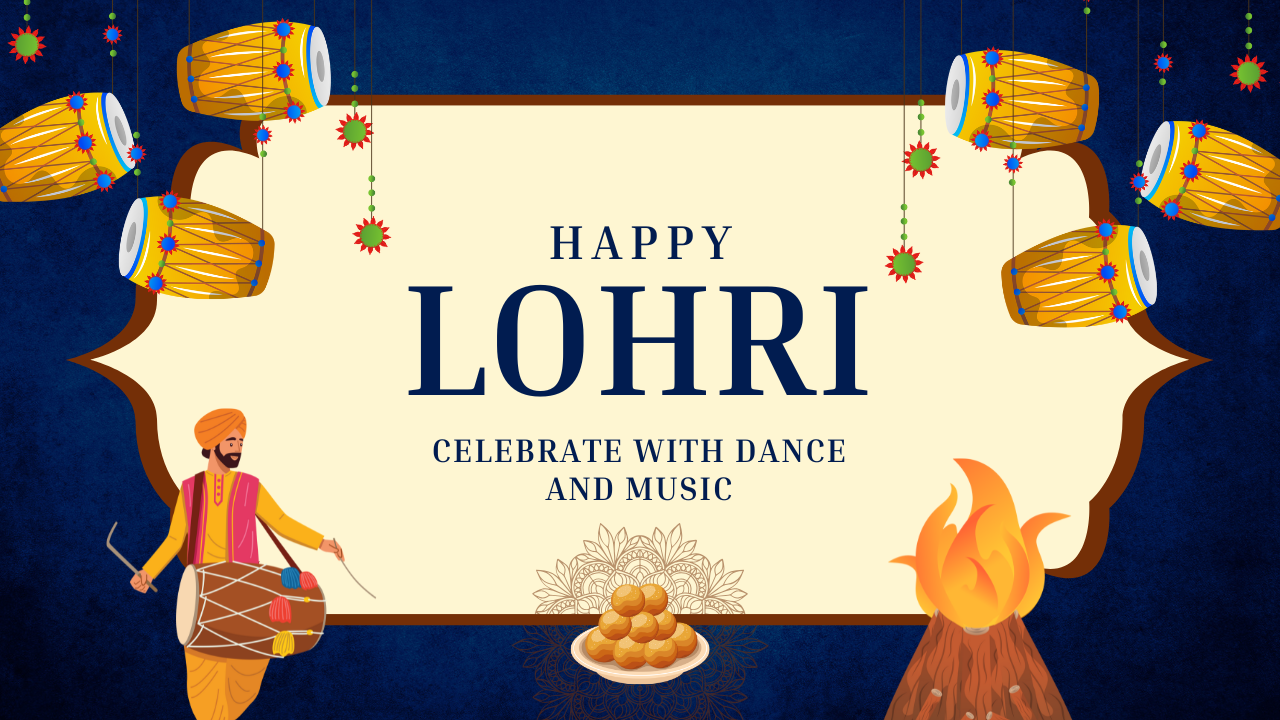
Lohri is a vibrant and joyful festival celebrated mainly in North India, especially in Punjab, Haryana, and nearby regions. Observed in mid-January, Lohri marks the end of the cold winter days and welcomes longer, brighter days ahead. It is a celebration filled with warmth, gratitude, music, and togetherness.
At its heart, Lohri is closely connected to nature and agriculture. For farmers, it signifies the harvest of winter crops and a time to thank nature for its blessings. Families come together to celebrate prosperity, happiness, and hope for a good future. Lohri is also considered very special for newly married couples and families with newborns, as it symbolizes new beginnings and good fortune.
The most important part of Lohri celebrations is the bonfire. As the sun sets, people gather around the fire, offering peanuts, rewari, popcorn, and sweets. These offerings are a way of expressing gratitude and praying for abundance and positivity. The crackling fire represents warmth, energy, and the burning away of negativity.
Music and dance add life to the festival. The beats of the dhol fill the air as people perform traditional Bhangra and Gidda. Folk songs related to harvest, bravery, and joy are sung together, creating an atmosphere full of excitement and unity. Lohri is a time when social boundaries fade, and everyone celebrates as one community.
Beyond rituals and celebrations, Lohri carries a deeper message. It reminds us to appreciate the simple joys of life—family, food, culture, and togetherness. It teaches gratitude, sharing, and staying connected to our roots in a fast-moving world.
In today’s times, Lohri continues to bring people closer, whether celebrated in villages, cities, or even virtually with loved ones far away. The spirit of Lohri remains the same—spreading warmth, happiness, and hope.
May the fire of Lohri fill your life with positivity, success, and joy.
Happy Lohri!